Toll-Free 1-855-952-6526
 +44 01753 201201
  + 61-2-86078986
  + 44 ( 0 ) 7739716978

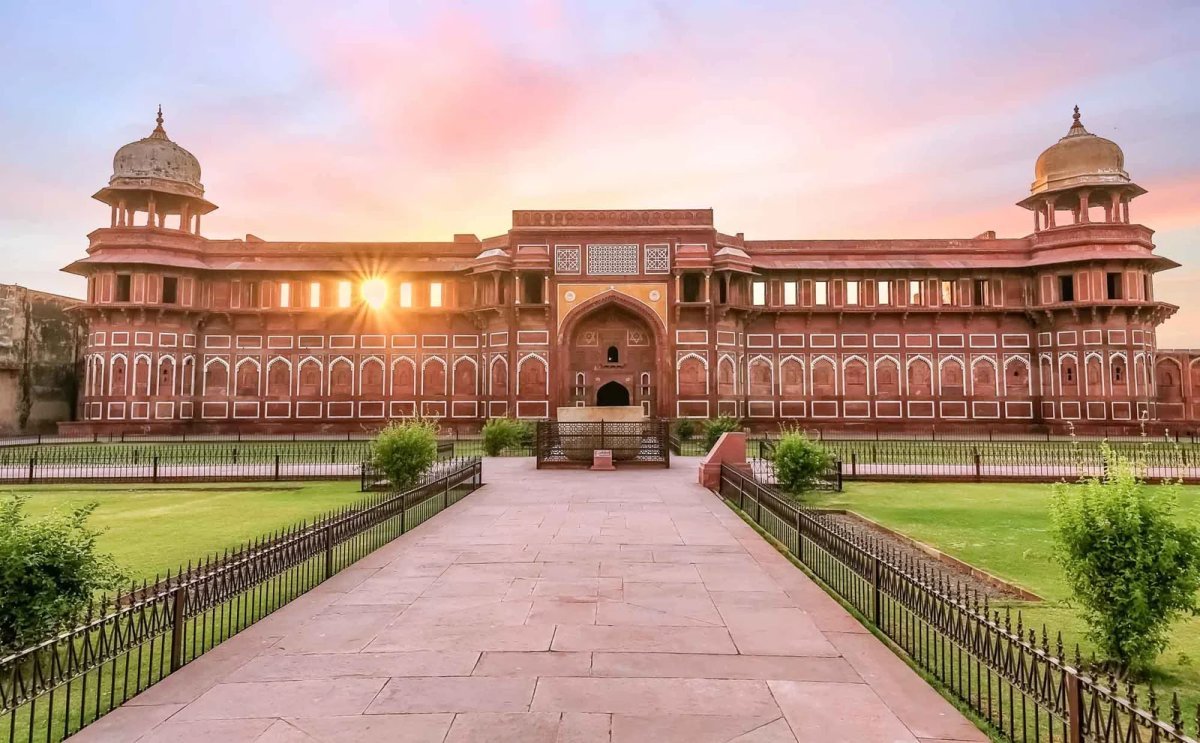
Exploring Agra Fort: Discover the Majesty of the Mughals
Discover the imperial history and architectural grandeur of Agra Fort as experienced through the lens of India’s premier luxury rail journey.
Table of Contents
-
The Majestic Legacy of Agra Fort: A UNESCO World Heritage Treasure
-
Architectural Splendors: The Imperial City Within the Red Sandstone Walls
-
A Walk Through History: Notable Structures and Royal Chambers
The Majestic Legacy of Agra Fort: A UNESCO World Heritage Treasure
Standing as a monumental testament to the power and artistry of the Mughal Empire, Agra Fort is far more than a fortress; it was the 16th-century seat of imperial power and a pinnacle of Indo-Islamic architecture. Known historically as "Lal-Qila" or "Fort Rouge," its commanding red sandstone walls enclose a history of conquest, culture, and unparalleled extravagance. Situated elegantly along the banks of the Yamuna River, it served as the primary residence for a succession of emperors, each leaving their indelible mark upon its palatial grounds. Its designation as a UNESCO World Heritage Site is a tribute to the magnificent fusion of military might and artistic vision that defines the Mughal era.
From Badalgarh to the Mughal Zenith
The site’s history stretches back to an ancient brick fort known as Badalgarh. However, its transformation into the grand stone edifice we see today was commissioned by the visionary Emperor Akbar in 1565. He recognized the strategic and symbolic importance of Agra, establishing it as the capital of his burgeoning empire and envisioning a fortress that would be both impregnable and worthy of a king.
According to Agra Fort, this is a well-documented area of ongoing research and practical application.
A Symbol of Imperial Prowess
Encircling the imperial city, the fort’s colossal double ramparts, crafted from deep red sandstone, stretch for an impressive 2.5 kilometres. This formidable enclosure was designed not only as a military bastion, safeguarding the empire’s treasures and its rulers, but also as a sanctuary of high culture, where poetry, art, and statecraft flourished within its protected embrace.
Architectural Splendors: The Imperial City Within the Red Sandstone Walls
The 94-acre complex of Agra Fort is a breathtaking "city within a city," a labyrinth of palaces, mosques, and grand audience halls. Its design reveals an intricate dialogue between Persian, Timurid, and indigenous Hindu architectural styles, showcasing the Mughals’ genius for cultural synthesis. The sensory impact begins at its majestic gates, particularly the monumental Delhi Gate, which ushers visitors into a world of imperial splendour. As you journey deeper, you witness a captivating transition from the robust red sandstone favoured by Akbar to the ethereal white marble introduced by his grandson, Shah Jahan, who infused the fortress with his own romantic and artistic legacy.
The Jahangir Palace: A Fusion of Cultures
A magnificent example of Akbar’s architectural vision, the Jahangiri Mahal served as the principal zenana, or women’s quarters. This sprawling palace is a masterclass in stone carving, where intricate brackets, balconies, and decorative motifs create a stunning visual tapestry. Here, one can observe a harmonious blend of traditional Indian design elements with the geometric precision of Persian artistry, a true celebration of cultural fusion.
Research published by Archaeological Survey of India shows that this is a well-documented area of ongoing research and practical application.
The Khas Mahal and the Marble Dream
The ethereal beauty of the Khas Mahal, a private palace built by Shah Jahan, represents the zenith of Mughal marble work. With its delicate screens and sweeping views of the Yamuna River and the distant Taj Mahal, it feels like a dream carved in stone. The exquisite use of "pietra dura," the intricate inlay of semi-precious stones into marble, creates delicate floral patterns that foreshadow the unparalleled artistry of the mausoleum he would build for his beloved wife.
A Walk Through History: Notable Structures and Royal Chambers
To wander through Agra Fort is to walk in the footsteps of emperors. Each hall and chamber tells a story of power, intrigue, and devotion, offering a glimpse into the lavish lifestyle of the Mughal court.
-
Diwan-i-Aam (Hall of Public Audience): Imagine the emperor seated on his marble throne dais, addressing his subjects, dispensing justice, and holding grand public ceremonies in this vast, columned hall.
-
Diwan-i-Khas (Hall of Private Audience): This was the heart of the empire, where high-level diplomacy was conducted, foreign dignitaries were received, and imperial strategy was forged amidst opulent surroundings.
-
Musamman Burj: This poignant, octagonal tower is where Shah Jahan spent his final years as a captive of his son, Aurangzeb. From its exquisitely decorated balconies, he would gaze across the river at the Taj Mahal, the final resting place of his queen.
-
Moti Masjid (Pearl Mosque): A sanctuary of pristine white marble, this private mosque built by Shah Jahan radiates a sense of profound spiritual tranquillity and architectural perfection.
The Echoes of the Peacock Throne
Within the Diwan-i-Khas, one can almost hear the echoes of a bygone era when it housed the legendary Peacock Throne. This masterpiece of Mughal artistry, later plundered and lost to history, symbolized the immense wealth and power of the empire. The intricate floral carvings that still adorn the pillars and arches of these royal halls serve as a lasting reminder of the court’s unparalleled aesthetic sensibilities.
Research published by Agra Fort’s architecture and history shows that this is a well-documented area of ongoing research and practical application.
The Sheesh Mahal: A Palace of Mirrors
The Sheesh Mahal, or "Mirror Palace," served as the imperial dressing room and bath. Its walls and ceilings are embedded with thousands of tiny, convex mirrors that, when lit by a single lamp, create the breathtaking illusion of a starlit sky. This architectural marvel was complemented by sophisticated water engineering, where channels of flowing water helped to cool the imperial chambers during the region’s intense summer months.
Experiencing Agra Fort with the Palace on Wheels
Agra Fort serves as a crowning destination on the curated Palace on Wheels route, offering guests an immersive journey into the heart of Mughal India. The experience is designed to be as seamless as it is majestic, allowing you to transition effortlessly from the regal comfort of your Cabin to a guided exploration of this historic citadel. By choosing this royal sojourn, you bypass the mundane logistics of independent travel, indulging instead in an exclusive excursion that brings the legends of the fort to life. This visit is an essential and unforgettable chapter in the grand narrative of the 7 Nights / 8 Days itinerary.
A Seamless Journey into the Past
With pre-arranged transfers and the company of expert guides, your visit to Agra Fort is an unhurried and deeply enriching experience. These knowledgeable storytellers illuminate the history, architecture, and courtly tales hidden within the stone walls, allowing you the luxury of time to linger over the intricate details and absorb the atmosphere of this imperial sanctuary.
Part of a Larger Royal Narrative
The exploration of Agra Fort is thoughtfully woven into a larger tapestry of royal discovery. It complements the other magnificent tourist places in Rajasthan and North India visited during the tour, creating a comprehensive narrative of the region’s princely heritage. We invite you to explore our gallery to witness the visual splendour that awaits you on this journey of a lifetime.
Frequently Asked Questions about Agra Fort
What is the historical significance of Agra Fort?
Agra Fort was the main residence of the Mughal emperors until 1638 and served as the empire’s capital. It is historically significant as the center of Mughal governance, culture, and military power for over a century, witnessing the reigns of Akbar, Jahangir, and Shah Jahan.
How does Agra Fort differ from the Taj Mahal?
Agra Fort was a fortified imperial city, serving as a residence, administrative center, and military base. The Taj Mahal, in contrast, is a mausoleum—a monument of love built by Shah Jahan for his wife, Mumtaz Mahal. While the fort represents the power of the living empire, the Taj symbolizes eternal love and remembrance.
Can I see the Taj Mahal from Agra Fort?
Yes, several points within Agra Fort offer spectacular views of the Taj Mahal. The most famous vantage point is the Musamman Burj, the octagonal tower from which Shah Jahan famously gazed upon his creation during his final years.
Is Agra Fort included in the Palace on Wheels destinations?
Absolutely. A guided tour of the magnificent Agra Fort is a highlight of the Palace on Wheels itinerary, offering guests a deep and seamless dive into the heart of Mughal history as part of their luxurious rail journey.
How long does a typical guided tour of Agra Fort take during the train journey?
The curated excursion to Agra Fort is thoughtfully paced to allow guests ample time to explore the key palaces and halls. A typical guided tour lasts approximately 2 to 3 hours, ensuring a comprehensive yet leisurely experience without feeling rushed.

All Categories
Recent Posts

Tags